
This document describes the memory and media present in all Quasonix RDMS™ third-generation receivers and notes that payload data cannot be stored in the RDMS™ itself, nor can it be routed to other devices on its Ethernet network.
The Final Word on Data Integrity
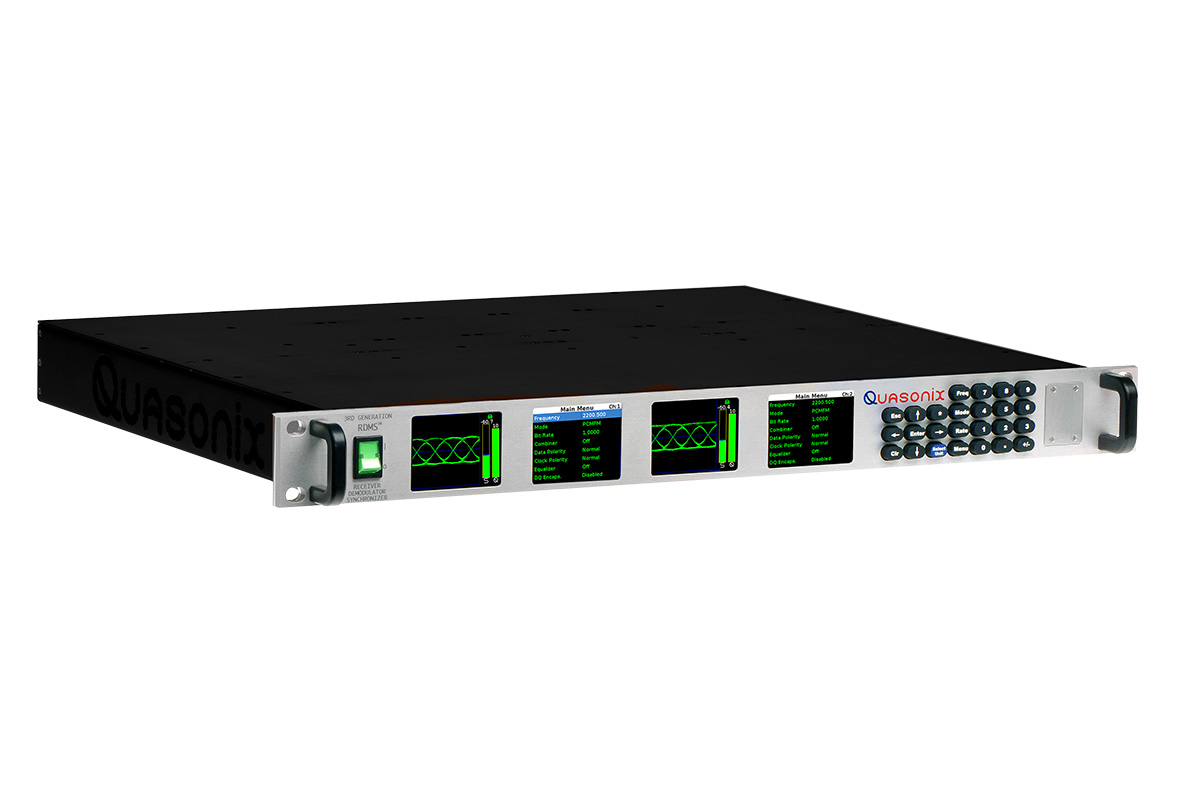
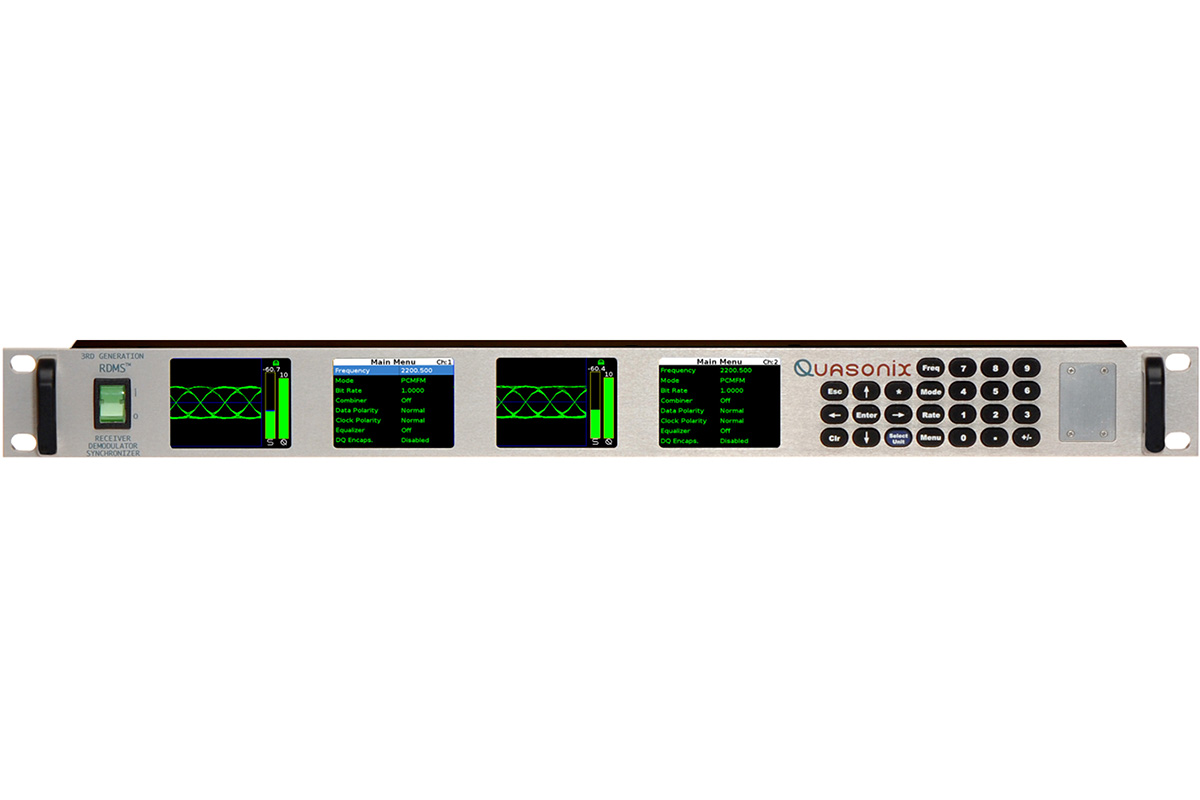
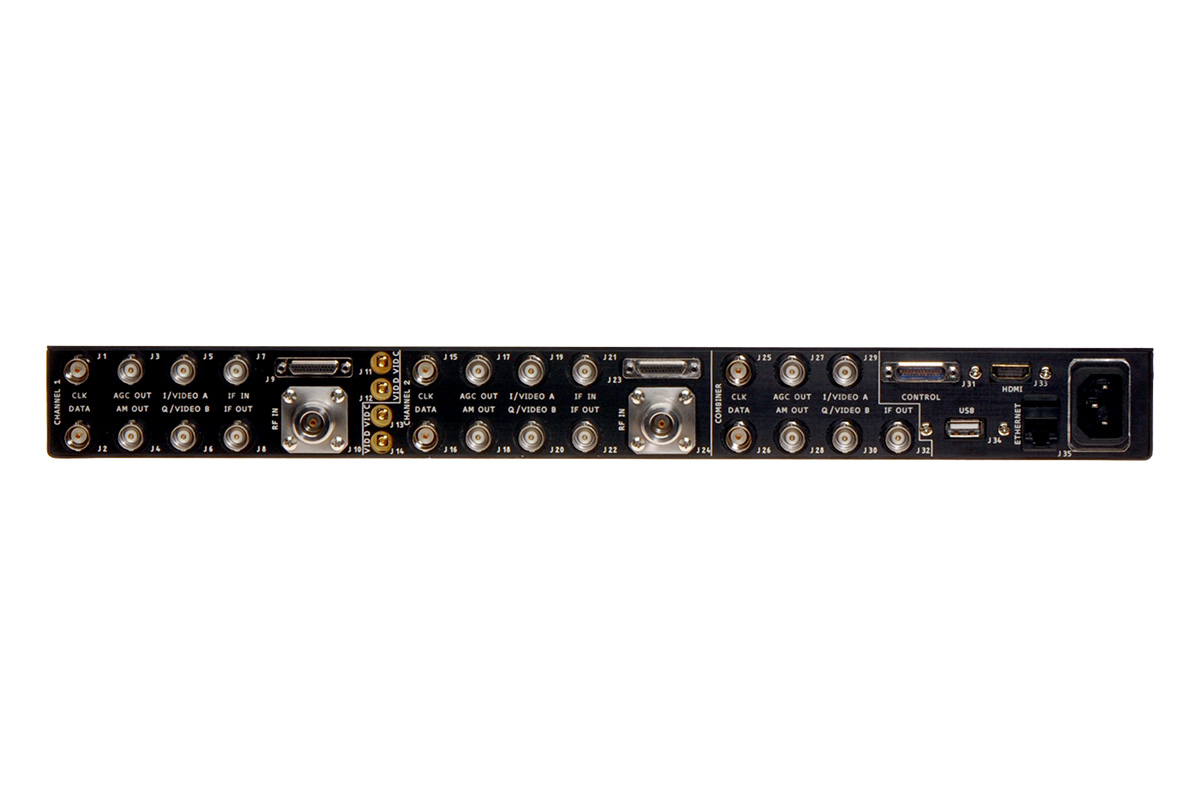
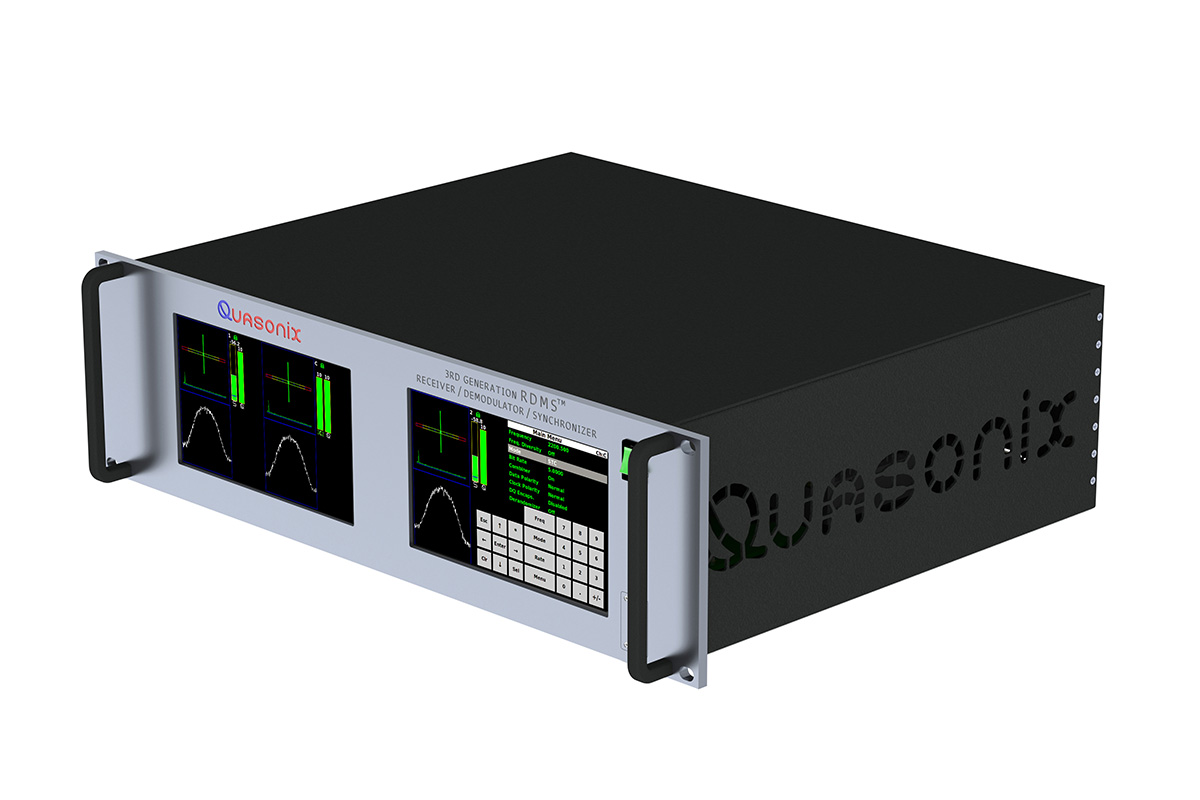
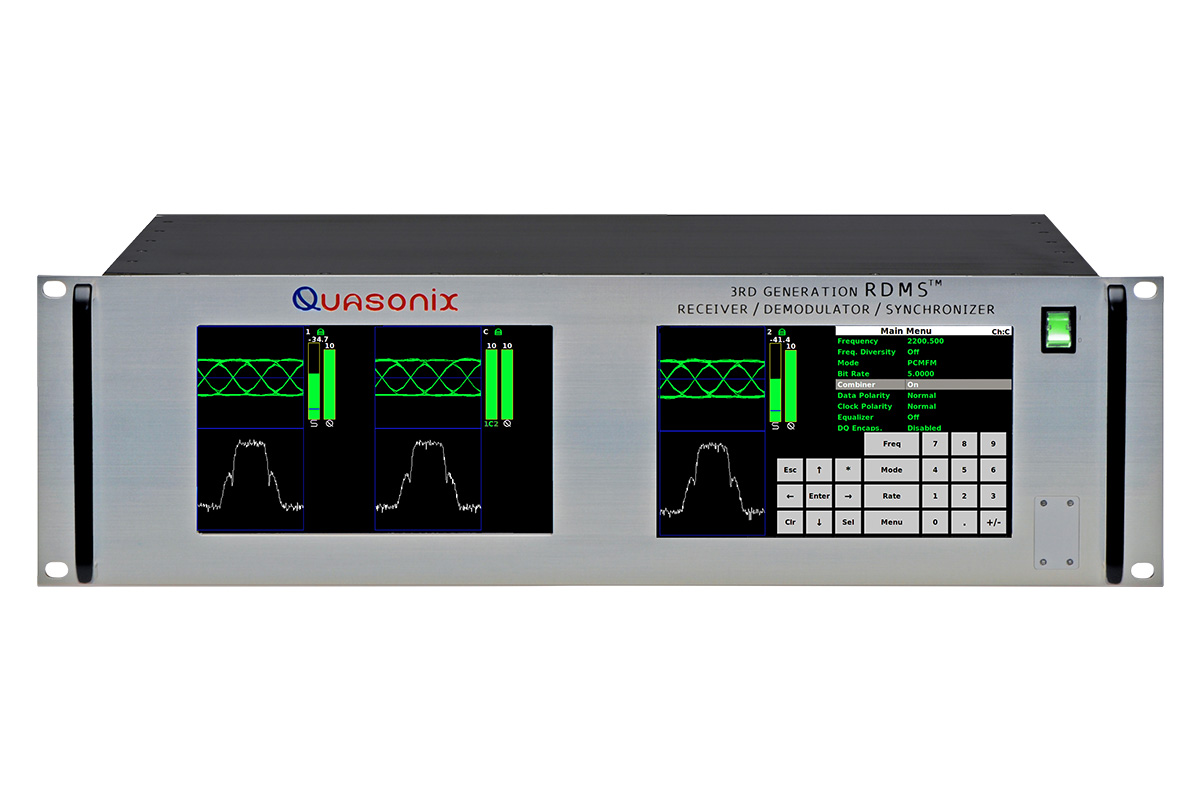
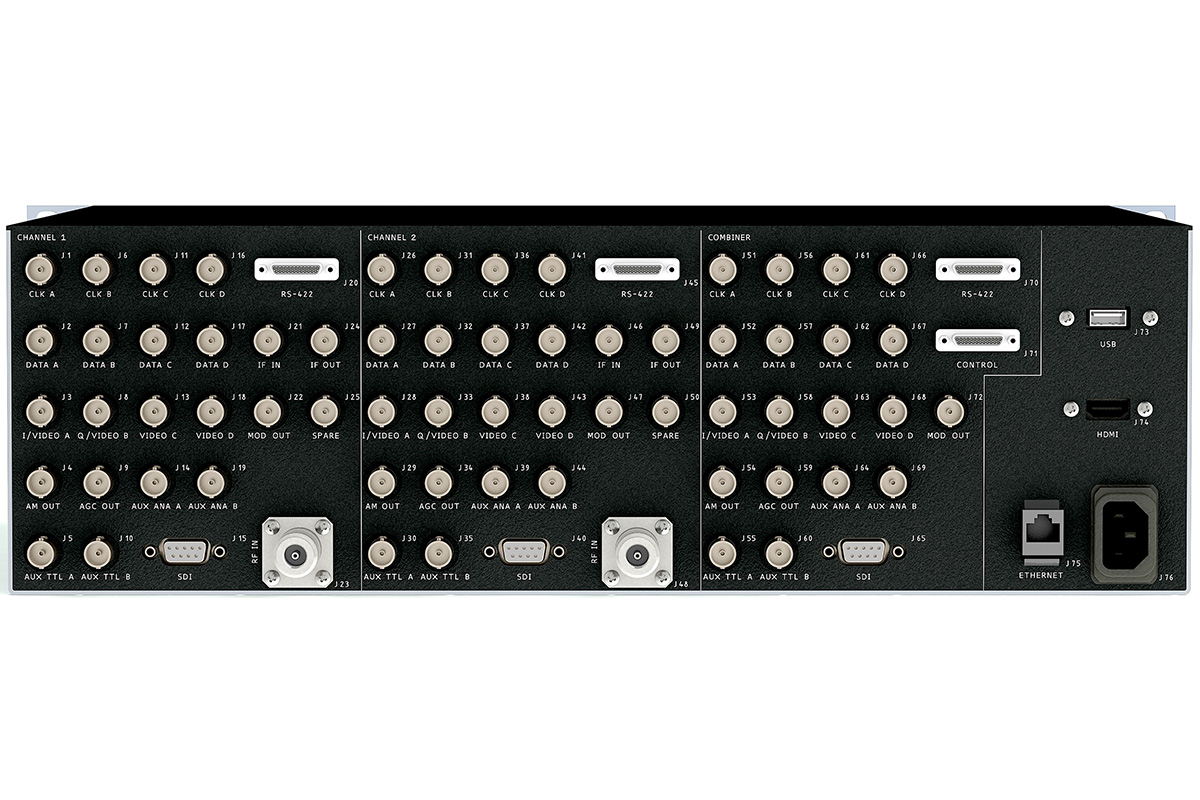
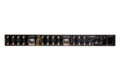
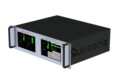
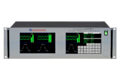
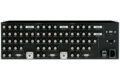
The highest performing telemetry receiver on the market is available in an elegant, compact 1U rack mount package and a 3U touchscreen package with dual, 7-inch full color touchscreens. Configurations include one channel, two channels, or two channels plus combiner; an integrated three-channel spectrum analyzer; automatic AGC zeroing; PCM deframing (header detection/extraction, Sub-Frame ID (SFID) checking/extraction); built-in playback demodulator; combiner IF output; simultaneous TTL and RS-422 outputs; contiguous frequency tuning; adaptive equalizer; and decoding for SOQPSK Space Time Coded and Low Density Parity Check encoded signals.

Get Stronger Core Performance
Benefit from lower noise, higher gain, faster sync, and greater ability to hold sync than any competing demodulator—in all ARTM modes, under the most challenging conditions.
 View datasheet

Be Prepared for Any Mission
With a tuning range from 200 MHz to 5250 MHz, bit rates from 24 kbps to 46 Mbps in either TTL or RS-422, built-in playback demodulation, integrated three-channel spectrum analyzer, and much more, you’ll have the capabilities you need for success every mission.
View datasheet

Ace the Toughest Tests
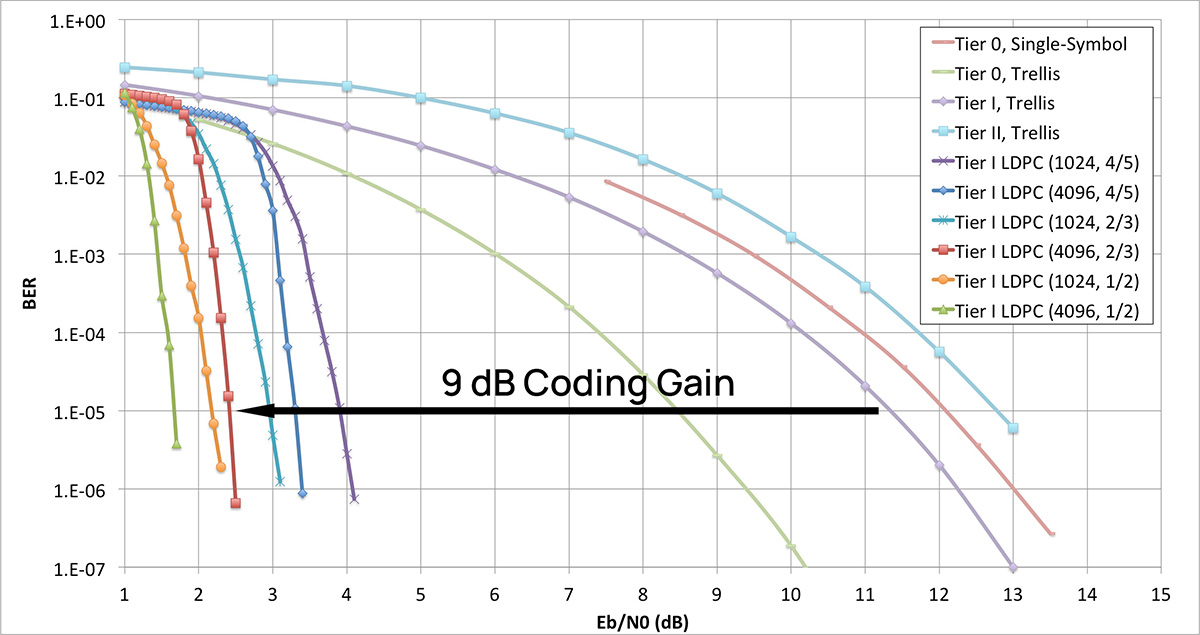
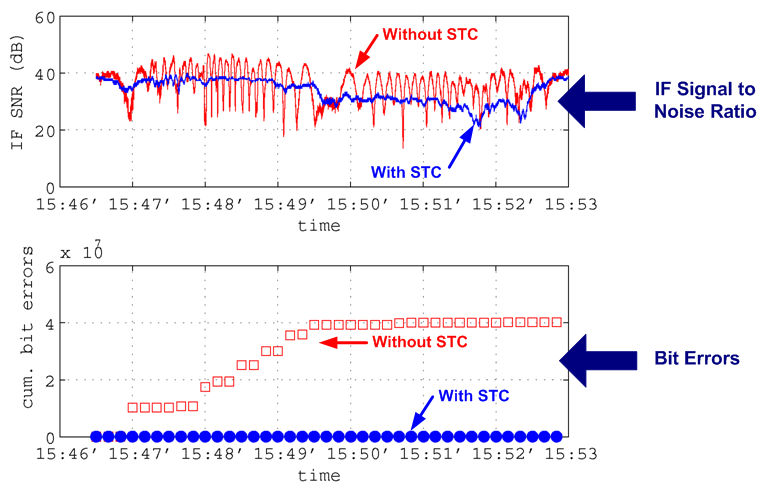
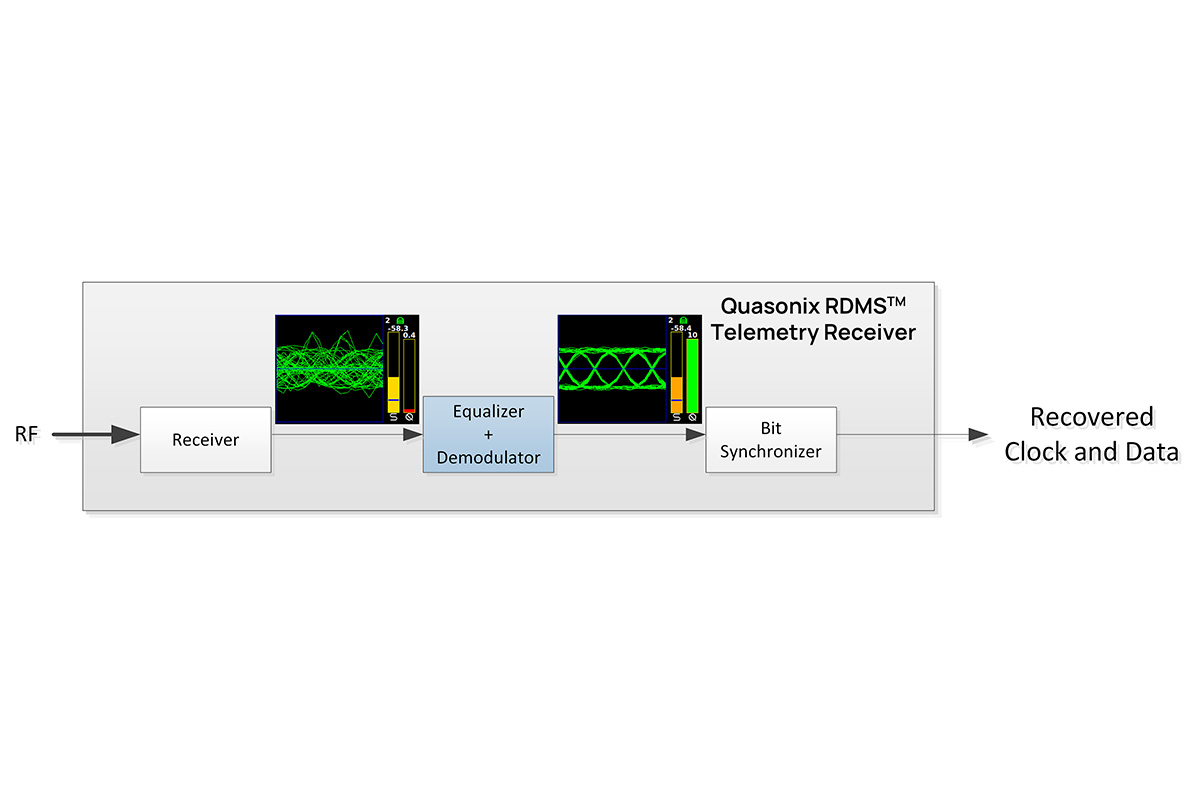
LDPC error correction nearly triples operating range; STC eliminates deep fades in two-antenna setups; and the industry’s best Adaptive Equalization (optional) deftly neutralizes multipath.
View datasheet

Add 3-Channel TMoIP Capability
Optional IRIG 218-20 compatible telemetry transport can be added to new or existing RDMS Receivers. Get features like automatic bit-rate and clock edge detection, with lifetime software updates. Contact Quasonix to learn more.
View datasheet

Understand Your Data’s Quality—For Real
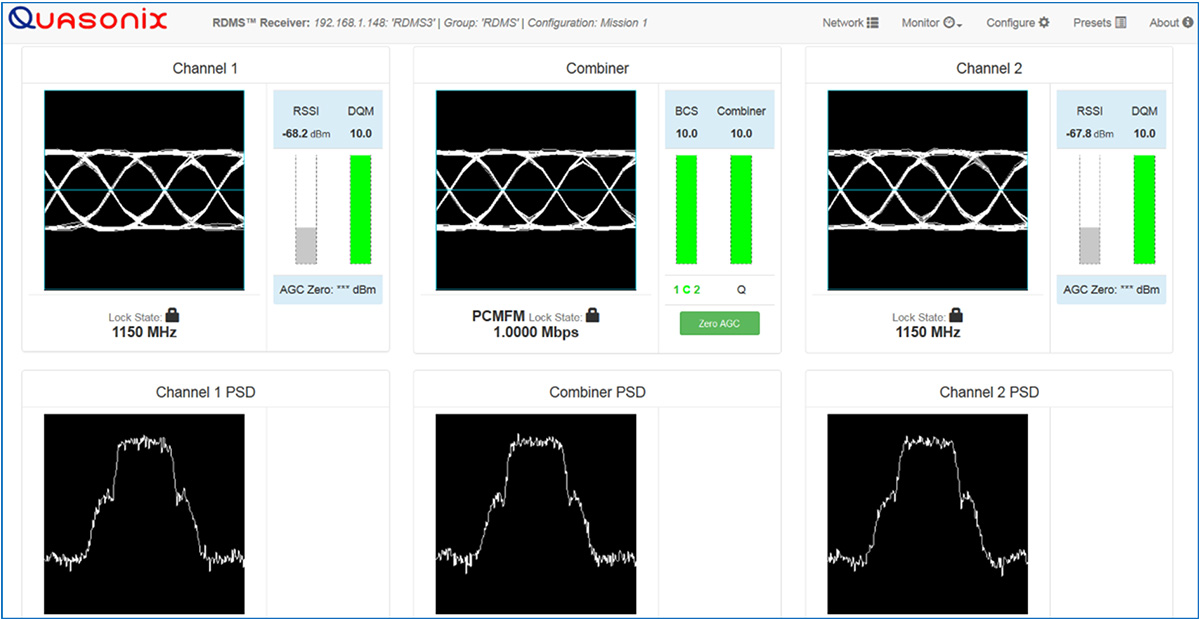
RDMS features the industry’s most accurate Data Quality Metric (DQM)—a real-time assessment of bit error probability—coupled with flawless Data Quality Encapsulation (DQE), rigorously powering downstream processes like BSS.
View datasheet

Ensure Optimal Data Output
The receiver’s integrated best-channel selector—a Quasonix exclusive—uses DQM bit by bit to choose the highest-quality data, matching or outperforming traditional maximal-ratio combining across all channel conditions.
View datasheet
Documents

Quasonix Catalog
Catalog of Quasonix’s full product line including transmitters, antennas, receivers, networking equipment, and test equipment. Also includes examples of possible product configurations.
16.30 MB
RDMS™ Rackmount Receiver Datasheet (Gen 3)
Features, specifications, and options of the Gen 3 Rackmount RDMS™ Telemetry Receiver.
Best-Channel Selection ITC Paper
“Obtaining Superior Performance From Dual-Channel Receivers Using Best-Channel Selection,” by Jim Uetrecht; presented at ITC 2018.
Best-Channel Selection Field Test Results ITC Paper
“Dual-Channel Receiver Performance Using Best-Channel Selection: Field Test Results,” by Jim Uetrecht; presented at ITC 2019.
RDMS™ Receiver Adaptive Equalizer Datasheet
Describes Quasonix’s telemetry receivers’ Adaptive Equalizer Mode, which combats multipath fading.
Receiver and Transmitter Space-Time Coding Datasheet
The Quasonix Space Time Coding Solution eliminates link outages caused by the “two-antenna problem,” improving behavior of received signal power and overall link availability.
Receiver and Transmitter Low-Density Parity Check Datasheet
The Low Density Parity Check (LDPC) Forward Error Correction mode improves link margin equivalent to nearly tripling the operating distance on your telemetry link.
Space-Time Coding ITC Paper
“Space-Time Coding Solution to the Two-Antenna Interference Problem,” by Mark Geoghegan & Louis Boucher; presented at ITC 2014.
SOQPSK with LDPC ITC Paper
“SOQPSK with LDPC: Spending Bandwidth to Buy Link Margin,” by Terry Hill & Jim Uetrecht; presented at ITC 2013.

RDMS™ Binary Interface (Gen 3, R19.3) (Download)
Describes the machine UART interface for Quasonix RDMS receiver bricks. Includes a description of the binary protocol; binary tag IDs; and examples.
19.3
20.86 KB
DQM and RDMS™ Troubleshooting Guide
Introduction to the Data Quality Metric and its role in troubleshooting, and an essential troubleshooting flowchart for Gen 3 RDMS™.
500.83 KB
RDMS™ Rackmount Receiver Manual (Gen 3, R19)
Installation and operation of the Quasonix 3rd Generation Rackmount RDMS™ Telemetry Receiver, updated to match RDMS™ System Version 19.3.
3.8.2

Receiver Manuals
Find all receiver User Manuals here. This page also explains how to find the onboard User Manual—matched to your unit’s software version—in rackmount units built or updated since late 2016.
Receiver and Transmitter Low-Density Parity Check Guide
This technical guide introduces Low-Density Parity Check (LDPC) encoding, its uses and benefits, the Quasonix products it is available for, and considerations for optimal set-up and use.
1.1.1
RDMS™ Rackmount Receiver Tape Output Configuration Guide
How to set up tape output for third-generation Quasonix rackmount telemetry receivers, including commands, connectors used, and troubleshooting.
1.1.1
RDMS™ Rackmount Receiver Firmware Update Guide (Gen 3)
Documents three methods for updating firmware on a Quasonix 3rd-Generation Rackmount RDMS™ Telemetry Receiver: SD Card; Network ; and Local.
1.2
RDMS™ Receiver Bit Error Rate Testing Guide
Instructions and commands for bit error rate testing on Quasonix RDMS™ receivers, plus guidance on using test noise (AWGN) commands.
1.0.1
RDMS™ Receiver Telnet and Serial Control Protocol Guide
Instructions for accessing and using Quasonix RDMS™ receivers’ serial control interface, including commands and syntax, for debugging purposes. The Telnet interface should only be accessed by advanced users. Contact Quasonix customer support before using these options.
1.0.5
RDMS™ Receiver Scripting Guide
Technical guide for understanding, creating, and editing scripts for Quasonix RDMS™ receivers.
1.0
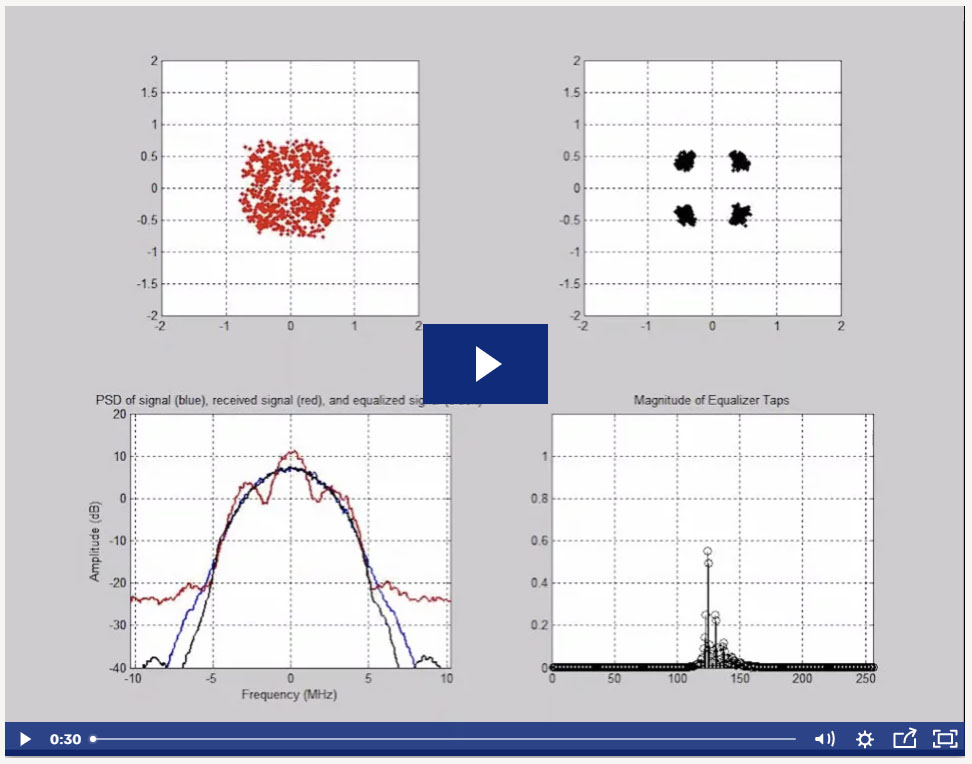
SOQPSK Adaptive Equalization Demo (Training)
Original, received (three-ray), and equalized SOQPSK signal.
(Used in TM Smorgasbord training, Day 2.)
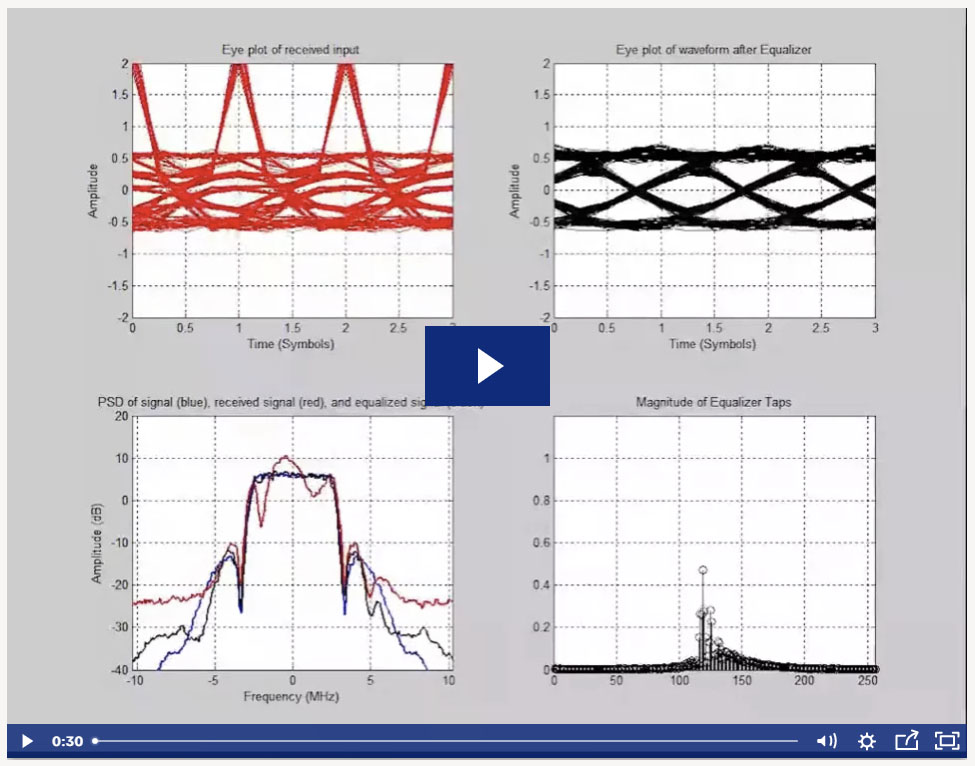
PCMFM Adaptive Equalization Demo (Training)
Original, received (three-ray), and equalized PCMFM signal.
Used in TM Smorgasbord training, Day 2.)
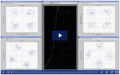
Maximal Ratio Combiner Simulation
Simulation of maximal-ratio diversity combining, showing how it phase aligns and coherently sums two signals but non-coherently sums their noise, resulting in up to 3 dB improvement in signal-to-noise ratio.
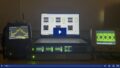
RDMS™ Adaptive Equalizer Demonstration – PCMFM
Brief demonstration of how our RDMS™ Adaptive Equalizer can conquer multipath, transforming a PCMFM signal with severe three-ray multipath distortion into nearly perfect data.
(Used in TM Smorgasbord training, Day 2.)
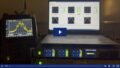
RDMS™ Adaptive Equalizer Demonstration – SOQPSK
Brief demonstration of how our RDMS™ Adaptive Equalizer can conquer multipath, transforming an SOQPSK signal with severe three-ray multipath distortion into nearly perfect data.